
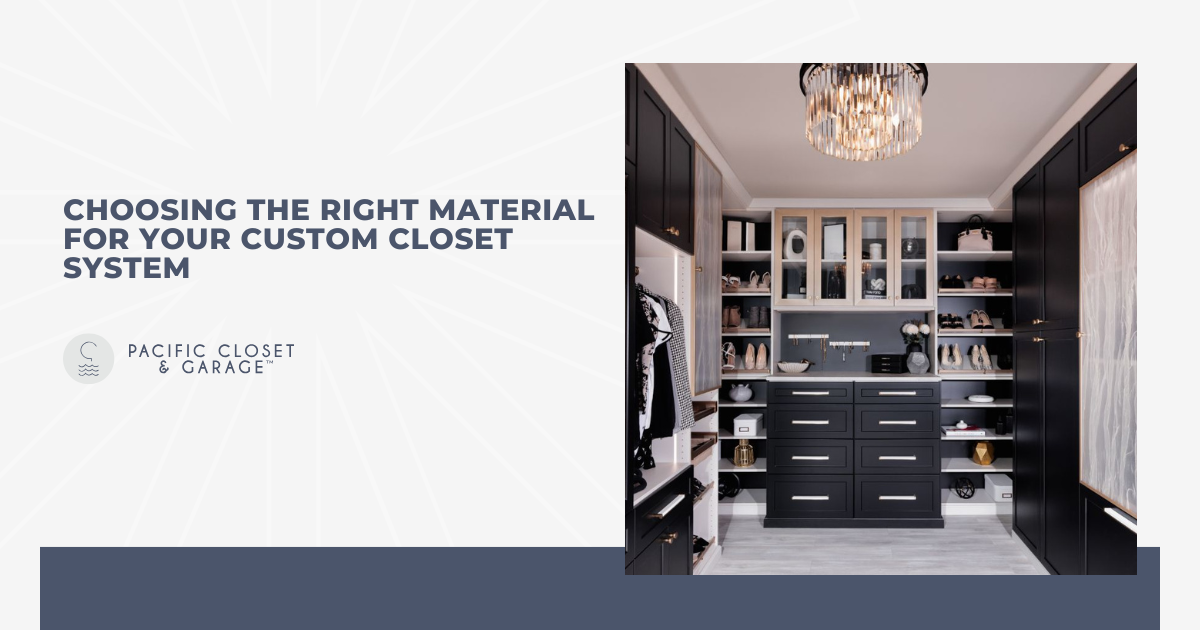
When designing a custom closet system, choosing the right material is one of the most important decisions in the entire process. The material affects how your closet system looks, feels, performs, and holds up over time. A well-designed layout can only perform as well as the materials behind it. Selecting wisely from the start sets the foundation for long-term durability and satisfaction.
I’ve guided many material selections over the years, and one thing has become clear: The best choice is rarely about picking the most expensive option. It’s about aligning durability, style, budget, and long-term expectations so your closet system truly works for you.
Here are the most important tips I recommend when choosing materials for your closet system:
- Match the material to your budget
- Prioritize durability for daily use
- Consider moisture and environmental conditions
- Choose a finish that matches your design style
- Evaluate weight capacity and structural strength
- Think about maintenance and cleaning
- Balance sustainability and material quality
- Compare samples and see materials in person
Keep reading to learn how each of these tips can help you make a confident and informed decision.
Match the Material to Your Budget
Your budget plays a significant role in determining the best material for your closet system. Different materials come with different price points, and those differences often reflect durability, construction, and finish quality. Understanding where your investment goes helps you make confident and informed decisions.
Here are the key budget factors I encourage you to consider:
- Understand Material Price Tiers: Laminate and engineered wood options typically sit at more accessible price points, while plywood and solid wood require a higher investment. The variation often reflects manufacturing complexity, sourcing, and long-term durability.
- Know What Drives the Cost Up: Thicker panels, upgraded edge banding, custom finishes, and premium drawer construction can increase overall pricing. These enhancements often improve performance and lifespan, making them worthwhile in high-use areas.
- Decide Where to Invest and Where to Save: High-touch areas like drawers and doors usually benefit from stronger materials and better hardware. Standard shelving or less visible sections can often use cost-effective materials without sacrificing performance.
Making thoughtful decisions within your budget ensures your closet system feels intentional rather than compromised.
Prioritize Durability for Daily Use
Your closet system is something you use every single day. Drawers open and close repeatedly, shelves carry weight, and hanging rods support everything from lightweight tops to heavy coats. Choosing a material that can handle consistent use is essential.
In my experience, high-quality laminates and well-constructed engineered wood products often perform exceptionally well in busy areas. They resist scratches, dents, and surface wear better than many softer natural woods. If you want your closet system to look as good in ten years as it does on day one, durability deserves serious attention.
It’s also important to consider how materials interact with hardware. Strong panels paired with reliable drawer slides and shelf supports create a system that feels solid and dependable. When durability is built into every layer, your closet simply functions better.
Consider Moisture and Environmental Conditions
Moisture can significantly impact certain materials. If your closet system is located near a bathroom or in a humid climate, that factor deserves careful consideration. Some materials may swell, warp, or weaken when exposed to consistent humidity.
Engineered materials with proper sealing often perform better in areas where moisture levels fluctuate. Solid wood can also work beautifully, but it must be properly finished and maintained. Thinking about your environment upfront can prevent frustration later.
Ventilation also plays an important role in protecting your investment. Good airflow helps maintain structural integrity and preserve finishes over time. Small design choices can make a noticeable difference in long-term performance.
Choose a Finish That Matches Your Design Style
Material and finish work together to define the look of your closet system. The core material provides strength, while the finish shapes the overall aesthetic. Taking time to align both elements creates a cohesive and polished result.
Laminates offer a wide range of colors and textures, including realistic wood grain patterns. Painted finishes create a clean and tailored appearance, especially in lighter shades. Wood veneers add warmth and depth, bringing a more natural and elevated feel to the space.
It’s also wise to think about how the finish will age over time. Some surfaces hide fingerprints and minor scratches better than others. Choosing a finish that complements both your design preferences and daily habits leads to lasting satisfaction.
Evaluate Weight Capacity and Structural Strength
Not all closet systems are built to support the same amount of weight. If you plan to store heavier items, structural strength should be part of the material conversation from the start. Paying attention to construction details can prevent sagging and long-term damage.
When evaluating structural integrity, focus on these essential elements:
- Identify Heavy Load Storage Areas: Shelves that hold folded denim, handbags, shoes, or storage bins require more support than lightly used sections. Recognizing these zones early allows you to reinforce them properly.
- Pay Attention to Panel Thickness and Span Length: Longer shelves without center supports are more prone to bowing over time. Thicker panels or added reinforcements significantly improve stability and durability.
- Ask About Reinforcement Options: Support cleats, vertical dividers, and upgraded shelf cores can strengthen your system without changing the overall design. These subtle structural upgrades often extend the lifespan of your closet system.
When the framework is solid, the entire space feels more secure and dependable.
Think About Maintenance and Cleaning
Every material requires some level of care over time. Before choosing your closet system material, it helps to think about how much maintenance fits comfortably into your routine. Selecting a finish that aligns with your habits can make daily upkeep simple and manageable.
Consider these maintenance factors before making your final selection:
- Choose Low-Maintenance Surfaces When Possible: High-quality laminates and textured finishes are typically easy to wipe clean and resist staining. They’re a practical solution if you prefer minimal upkeep.
- Understand the Care Needs of Natural Materials: Solid wood and painted finishes may require occasional polishing or touch-ups to maintain their appearance. While beautiful, they generally need more attention over time.
- Follow Smart Cleaning Practices: Using a soft cloth and gentle cleaner helps preserve the finish and protect edges. Avoid excess moisture around seams and corners to prevent swelling or wear.
Selecting materials with maintenance in mind helps your closet system stay beautiful without adding unnecessary work to your schedule.
Balance Sustainability and Material Quality
Sustainability has become an important consideration in material selection. Many engineered wood products now meet strict environmental standards and use responsibly sourced components. Choosing thoughtfully made materials allows you to support both quality and environmental responsibility.
Durability also plays a key role in sustainability. A closet system that lasts for decades reduces waste and the need for replacement. Longevity is often one of the most responsible choices you can make.
If sustainability matters to you, ask about certifications and manufacturing practices. Transparent sourcing combined with solid construction offers peace of mind. Taking a few extra steps during the selection process can help you feel confident in both the environmental and structural integrity of your closet system.
Compare Samples and See Materials in Person
Choosing materials based solely on photos can be misleading. Lighting, texture, and color variation often look different in person than they do on a screen. Seeing materials firsthand allows you to evaluate quality with much more confidence.
When reviewing samples, pay attention to surface texture, edge finishes, and overall weight. Subtle differences in density and construction can signal long-term durability. Taking the time to compare options side by side helps you better understand what you’re selecting.
It’s also helpful to view samples in the lighting where your closet system will actually be installed. Natural and artificial light can shift how colors appear throughout the day. Making your decision with real materials in hand leads to fewer surprises and greater satisfaction.
Conclusion
Choosing the right material for your closet system is about creating a space that feels just as good to use as it looks. With thoughtful planning and a clear understanding of your priorities, you can select materials that balance style, strength, and practicality. When you build your closet system on the right foundation, you’re setting yourself up for a space that supports your routine and makes everyday life a little easier.
