
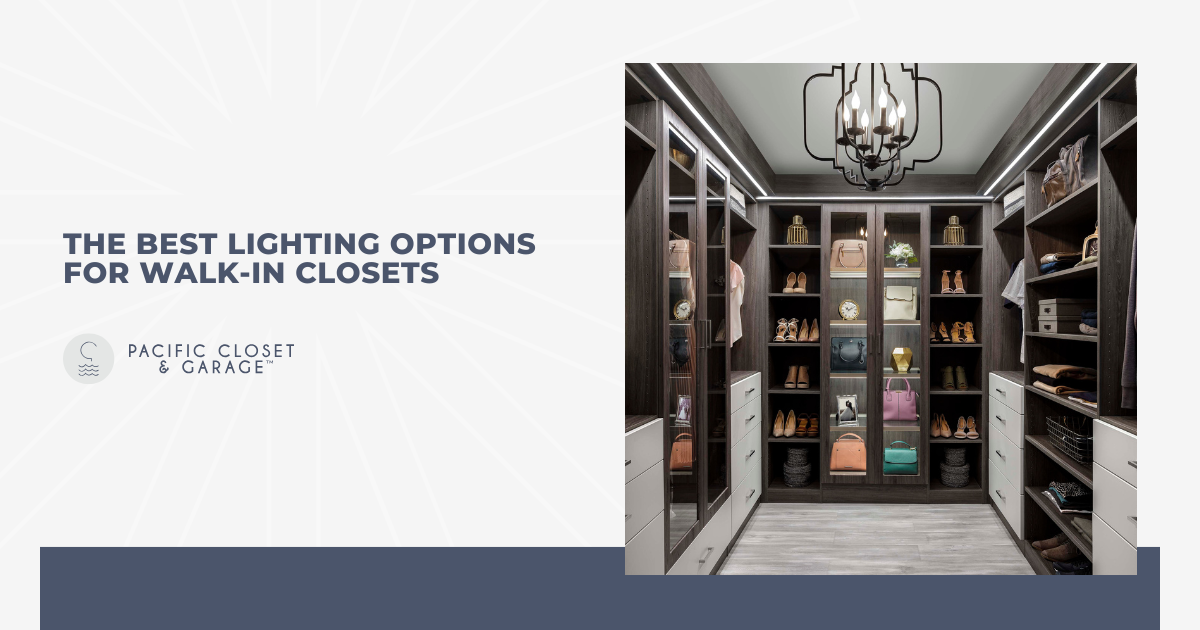
Walk-in closets tend to get a lot of love for their storage systems and overall layout, and rightfully so. But lighting is one element that often gets overlooked in the process. The right fixtures can completely change how your closet looks and functions, making it easier to spot what you need and pull together an outfit with confidence. Without adequate lighting, even the most carefully organized closet can feel dim and frustrating to use.
Over the years working in closet design, I've seen how much of a difference thoughtful lighting makes for homeowners. It goes beyond brightness; getting the right type of light into the right spot matters just as much. If you're starting fresh or refreshing an existing space, knowing your options is the first step toward a closet you'll actually enjoy using.
Take a look at the lighting options we'll be covering:
- Recessed ceiling lights
- LED strip lights
- Under-cabinet and shelf lighting
- Lighted closet rods
- Natural light solutions
- Sensor-activated and smart lighting
- Choosing the right color temperature
Each option serves a unique purpose, and the best results often come from combining a few of them strategically. Keep reading to find out which ones make the most sense for your space.
Recessed Ceiling Lights
Recessed ceiling lights are one of the most popular starting points for walk-in closet lighting, and it's easy to see why. They sit flush with the ceiling, so they don't eat into your visual space or crowd out your hanging garments. These fixtures spread light evenly across the room, giving you solid overall coverage before you layer in anything else. If your closet has lower ceilings, they're especially practical since there's no bulky fixture hanging down into the space.
Placement matters just as much as the fixture itself. You'll want to space recessed lights evenly to avoid dark corners or pockets of shadow. A well-planned layout takes your closet's size, shape, and primary storage sections into account. Recessed ceiling lights work best as a base layer, with other targeted fixtures filling in the gaps where overhead light can't quite reach.
LED Strip Lights
LED strip lights are a versatile and affordable way to bring focused light to specific areas of your closet. You can run them along the underside of shelving, the top of upper cabinets, or along the back wall of a display section. They're low-profile and flexible, so they can fit into spots where traditional fixtures simply can't. Many homeowners are genuinely surprised by how much brightness a simple LED strip can add to an otherwise shadowy area.
LED strips also come in a range of color temperatures, so you can choose a warm or cool tone to suit your preference. They're energy-efficient and long-lasting, which makes them a smart investment for a space you use every day. Installation is often straightforward enough for a DIY project, but a professional can make sure they're wired cleanly for a polished finish. For the best results, use them alongside your main overhead lighting rather than as a stand-alone solution.
Under-Cabinet and Shelf Lighting
Even with great overhead lighting, the area beneath shelves can stay surprisingly dark. Under-cabinet and shelf lights solve this problem by directing light downward onto your folded items, bags, shoes, and accessories stored below eye level. Puck lights and slim bar lights are popular choices for this purpose since they're small, unobtrusive, and easy to mount. They make it much easier to see what's stacked on lower shelves without having to dig around or pull everything out.
This type of lighting is especially useful in deep closets where overhead light struggles to reach every corner. In my experience, clients who add this layer to their space often say it's one of the most practical upgrades they've made. It's a small addition that has a big impact on day-to-day usability. If your shelves hold a mix of items in different colors, proper under-shelf lighting also helps you quickly distinguish between similar shades.
Lighted Closet Rods
Dark garments hanging close together can be incredibly hard to tell apart, especially in low light. Lighted closet rods solve this by shining light directly onto your hanging clothes from the rod itself. This eliminates the shadowing that typically happens when overhead light gets blocked by the garments before it can do its job. It's the kind of feature that feels like a luxury until you've used it daily, and then it becomes hard to imagine going without.
These rods are available in a range of sizes to fit standard closet configurations, and many plug directly into an outlet for simple setup. They're especially helpful in larger walk-in closets where hanging sections take up a significant amount of space. If you have a dedicated section for suits, dresses, or dark-colored clothing, a lighted rod can make that area far more functional. It's a targeted solution that works beautifully alongside your other lighting layers.
Natural Light Solutions
Nothing matches natural light when it comes to seeing true colors. If your walk-in closet has access to an exterior wall, adding a window can dramatically improve how well you distinguish between similar shades of clothing. For interior closets without outward-facing walls, solar tubes and skylights are excellent alternatives that channel daylight in from the roof. Natural light is especially valuable in the morning when you're getting dressed and color accuracy matters most.
Of course, natural light comes with a few considerations, like privacy and UV exposure. Frosted glass or sheer window coverings can give you the brightness you need without sacrificing privacy. To protect your clothing from fading, look for UV-filtering glass options when planning your windows or skylights. When natural light is incorporated into the design from the start, it can also reduce how much you rely on artificial lighting during daylight hours.
Sensor-Activated and Smart Lighting
If you've ever fumbled for a light switch with your arms full of clothes, you already understand the appeal of sensor-activated lighting. Motion sensors automatically turn lights on when you enter the closet and off when you leave, so you never have to worry about wasting energy or juggling a switch. Smart lighting takes this a step further, letting you control brightness, color temperature, and schedules right from your phone. It's a convenient upgrade that makes your closet feel intuitive and effortlessly modern.
Smart bulbs and systems are now widely available and compatible with most major home platforms, including Alexa, Google Home, and Apple HomeKit. You can set your closet lights to come on gradually in the morning or dim in the evening for a softer atmosphere. For households where multiple people share a closet, smart controls make it easy for everyone to customize the experience. Best of all, sensor-activated and smart lighting are compatible with any of the other fixture types on this list.
Choosing the Right Color Temperature
Even with the perfect fixtures in place, the wrong bulb can make your closet feel off. Color temperature, measured in Kelvins, determines how warm or cool the light appears. Bulbs in the 2,700 to 3,000K range produce a warm, yellowish glow that's cozy but can make it harder to accurately judge clothing colors. For a walk-in closet, most lighting professionals recommend a range of 3,500 to 4,000K, which delivers a clean, neutral white light that's much easier to work with.
If accurate color matching is a top priority for you, going up to 5,000K can come close to mimicking natural daylight. I always encourage clients to test bulbs in their actual space before committing to a full installation, since lighting can look very different depending on wall color, flooring, and existing natural light. Getting the color temperature right ties all of your other lighting choices together and ensures the space performs as well as it looks. It's one of those details that's easy to overlook but makes a noticeable difference in everyday use.
Conclusion
Lighting might not be the first thing that comes to mind when you're designing a walk-in closet, but it's one of the details that truly makes or breaks the space. With the right combination of fixtures, placements, and bulbs, you can create a closet that's easy to navigate, visually appealing, and a pleasure to use every morning. The options on this list are a solid starting point, and even small upgrades can make a noticeable difference in how your space looks and feels day to day.
