
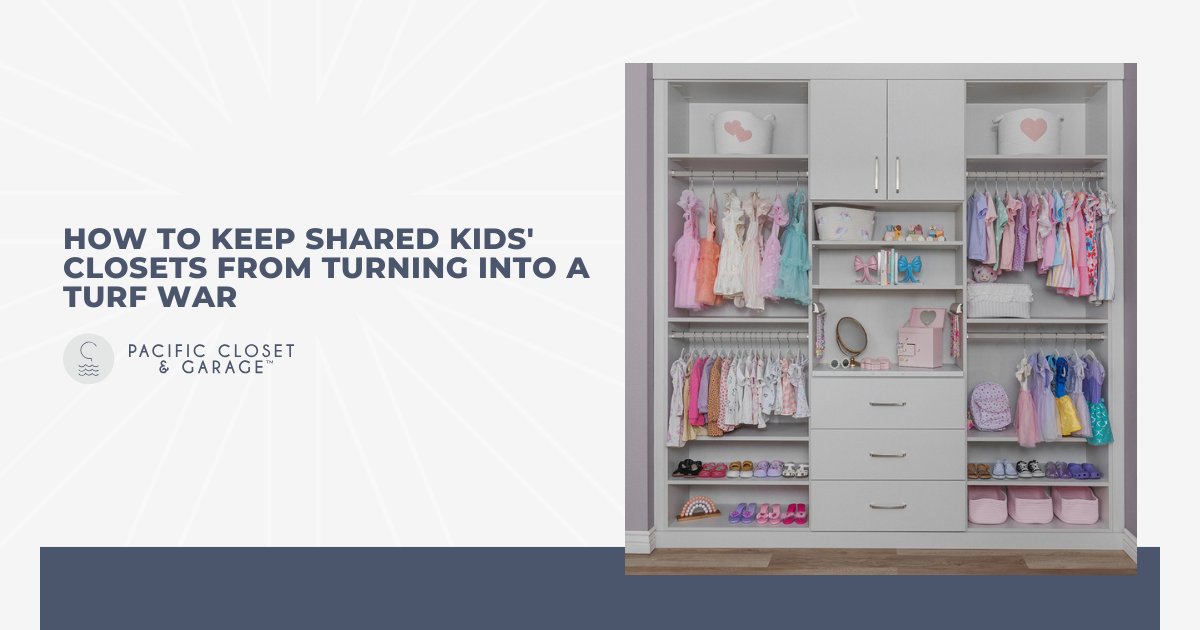
Siblings sharing a kids' closet sounds simple enough until one child's soccer cleats are buried under the other's dress-up pile and nobody can find anything on a school morning. Space isn't usually the real problem. What tends to cause the friction is the lack of clear ownership, where nothing has a designated spot or a defined boundary.
Clear divisions and smart storage are what actually keep shared closets from turning into a daily argument. When each child knows exactly where their belongings live and that space is theirs to manage, the "that's mine" standoffs happen a lot less. It comes down to a few practical moves that don't require a full renovation or a bigger closet.
A peaceful kids' closet comes down to a few smart decisions. I always start with these nine helpful changes because they keep siblings out of each other's space:
- Divide the space clearly
- Assign a color to each child
- Use labels everyone can read
- Choose adjustable shelving and rods
- Add hooks and cubbies for easy reach
- Set simple ground rules together
- Give each child their own drawers or bins
- Involve kids in the organizing process
- Invest in a custom closet system
Let's go through each one so you can figure out which changes your kids' closet needs most and where to start.
Divide the Space Clearly
Two kids sharing one closet need to know where their side starts and ends. Draw a real boundary down the middle, whether it's a divider panel, a change in shelf color, or simply the left rod versus the right rod. Kids respect lines they can see, and vague sharing almost always turns into a daily grab for the same spot.
When I plan a shared kids' closet, I split the vertical space too, not just the width. Give one child the upper section and the other the lower, or alternate shelves so neither feels shortchanged. Height splits work well when kids are different ages, since the younger one gets the reachable zone.
Keep the split roughly equal so nobody feels cheated. Measure the hanging space and the shelf footage before you assign sides, then match them as closely as you can. Fairness up front saves you from refereeing the same argument next week.
Assign a Color to Each Child
Color is the fastest shortcut kids understand, long before they can read a label. Pick one color per child and carry it across everything they own in the closet: hangers, bins, hooks, and shelf tags. One glance tells everyone whose stuff belongs where, which cuts the guesswork and the blame.
Here's how I put color to work in a kids' closet:
- Match the Hangers: Give each child a single hanger color and stick to it. Mixed piles sort themselves fast when the colors do the talking for you.
- Tag the Shelves: Add a colored strip or dot to each child's shelf edge. Kids return items to the right spot without asking you every single time.
- Color the Bins: Use one bin color per child for shoes, socks, and odds. Toys and clothes stop migrating across the closet once the containers are claimed.
Let each child pick their own color if you can. Ownership feels stronger when the kid chooses it, and I've watched that small choice turn a reluctant helper into someone who actually keeps their side tidy.
Use Labels Everyone Can Read
Labels take the daily questions off your plate. Mark each drawer, shelf, and bin with what goes inside so kids can put things away without a running commentary from you. For pre-readers, pair a word with a small picture of the item, like a sock or a shirt, so the label works for any age.
Place labels at the child's eye level, not yours. I also believe accessibility is a big part of good organization, so I set label height by who's actually using that section of the kids' closet. Reachable, readable labels get used, and the ones stuck too high get ignored within a day.
Keep the wording simple and consistent across the whole closet. Use the same term every time, so "pajamas" doesn't become "PJs" on the next shelf. Swap or update labels as your kids grow and their clothes change categories, since a good closet should keep pace with them.
Choose Adjustable Shelving and Rods
Fixed shelving fights you the moment your kids grow, and they grow fast. Adjustable rods and shelves let you drop everything low enough for small hands, then raise it as legs get longer. Reachable storage means a child can hang their own coat and grab their own shoes, which is half the battle in any shared closet.
Set the hanging rod at a height each child can actually use right now. When both kids can reach their own clothes, they stop pulling items off the taller sibling's rod out of pure convenience. I've seen plenty of morning standoffs disappear once each kid could manage their own side without help.
Plan for the closet to change every year or two. Loosen a bracket, move a shelf up a notch, and the same system keeps working through elementary school and into the teen years. Buying adjustable from the start beats replacing a whole kids' closet later.
Add Hooks and Cubbies for Easy Reach
Hooks and cubbies forgive the mess that hangers punish. Kids struggle with slim hangers and neat folds, so give them a hook for the backpack and a cubby for the shoes instead. Easy drop-off spots mean items land where they belong rather than on the floor between two kids' feet.
A few placement ideas I lean on for a kids' closet include:
- Low Hooks for Daily Gear: Mount hooks at shoulder height for jackets and bags. Kids hang their own things when it takes one motion instead of a careful loop over a hanger.
- Open Cubbies for Shoes: Give each child a stack of cubbies in their color. Pairs stay together and stop wandering to the wrong side of the closet.
- A Catch-All Bin per Kid: Add one bin for the random stuff that never fits a category. In this way, clutter has a home, and the floor stays clear.
Reachability is what makes any of this stick. I set hooks and cubbies where the child can use them today, then move the hooks up as they grow, so the closet never outpaces the kid using it.
Set Simple Ground Rules Together
Storage solves half the problem, and clear rules handle the rest. Sit down with both kids and agree on a few basics, like "you hang your own coat" and "borrowing means asking first." Rules the kids help write get followed far more often than rules you hand down from above.
Keep the list short so it actually sticks. I usually cap it at three or four rules, since a wall of instructions in the kids' closet just gets tuned out. Post the rules somewhere visible, and revisit them when a new argument shows a gap you missed.
Fairness matters more than perfection here. Make sure the rules apply to both kids equally, so neither one feels singled out. Consistent expectations turn the closet from a battleground into shared territory both children can manage on their own.
Give Each Child Their Own Drawers or Bins
Shared drawers breed conflict faster than almost anything else in a kids' closet. Give each child their own drawers or bins so socks, underwear, and folded clothes never mix. Personal storage removes the "you took mine" fight before it starts, since there's nothing to dispute.
Divided drawers keep things sorted inside each child's zone. I like deep drawers with dividers because they hold a season's worth of clothes and still let a kid find one specific shirt fast. Clear or colored bins work just as well for kids who'd rather toss than fold.
Label each drawer and bin by owner and contents so the system runs itself. Assign a matching color to reinforce whose is whose, and the closet starts policing its own boundaries. Once every item has an owner and a home, the daily sorting mostly takes care of itself.
Involve Kids in the Organizing Process
Kids protect what they help build. Bring both children into the setup: let them choose their colors, decide which shelf holds what, and help sort their own clothes. Ownership of the plan turns into ownership of the upkeep, and a kids' closet they designed feels worth keeping neat.
Give each child a real job during the sort. Younger kids can match socks or fill their shoe cubbies, while older ones can handle folding and labeling. I've found the closet stays organized far longer when the kids have a hand in deciding where everything goes, since they actually remember the plan.
Make it a short, upbeat project instead of a chore marathon. Break the work into small sessions so nobody burns out, and celebrate the finished result together. Kids who feel proud of their closet are far more likely to keep it that way.
Invest in a Custom Closet System
Off-the-shelf organizers rarely fit two kids and one shared space well. A custom closet system is built around your exact room, your kids' ages, and the way they actually use their things. Purpose-built zones, adjustable rods, divided drawers, and per-child sections solve the turf war at the design stage instead of patching it later.
One costly mistake I see is families forcing a shared kids' closet to work with mismatched bins and hand-me-down shelving that never fit right. A designed system gives each child a clear, equal share and grows with them for years. I always tell parents that the goal is a closet their kids can run without a referee.
When you work with a professional installer, they'll measure the space carefully, listen to how your kids actually use it, and design something built to keep the peace long-term. Adjustable components, durable materials, and a fair split from day one make a custom closet worth every dollar in quieter mornings and fewer arguments. Done right, it's a setup both kids can manage on their own for years to come.
Conclusion
Fewer closet conflicts come down to two things: space each kid can claim and a system they can follow. Skip the pressure to make it perfect. In my experience, kids stick with a setup they helped create far longer than one handed to them. Give both kids clear zones, matching colors, and drawers they don't have to share, then step back and let them manage it. Your kids' closet becomes their responsibility, not just yours. Fair, reachable, and clearly divided beats expensive every time.
